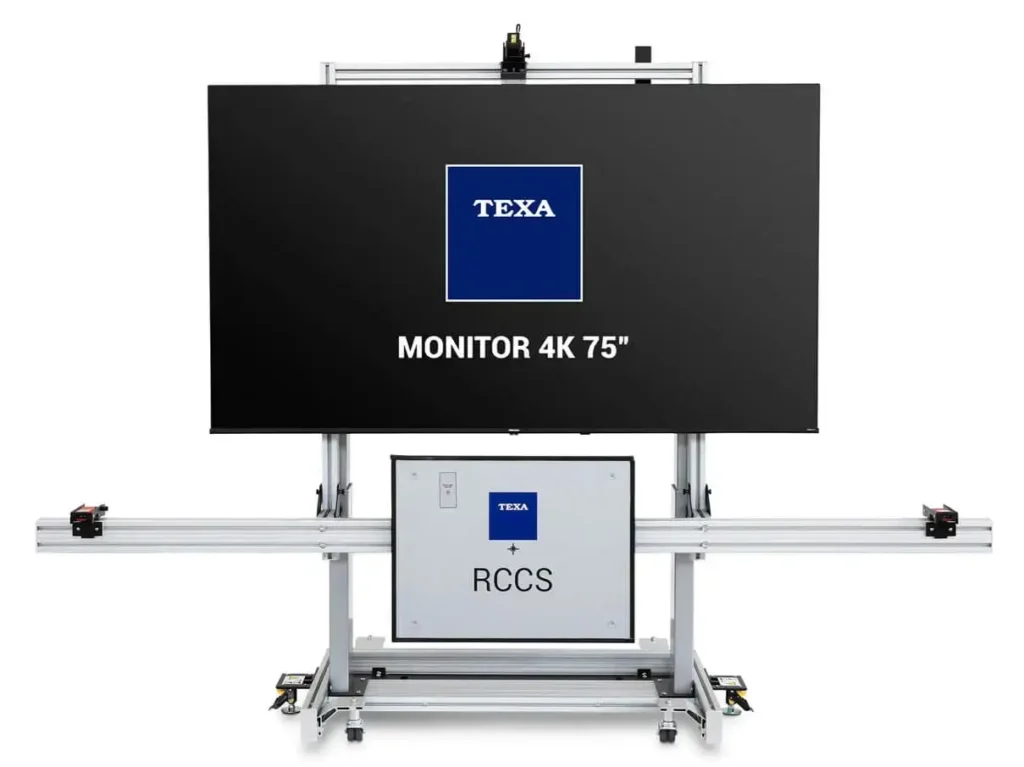
ADAS & ACC Truck Calibration

Adaptive cruise control (ACC) adjusts the speed of vehicles to maintain a safe distance to the vehicle in front. Maintaining a safe distance in heavy traffic requires intense concentration. ACC reduces such stress and prevents rear-end collisions in traffic. The system can also adjust cruising speed based on traffic signs, the contours of the road, or via map data from the vehicle’s navigator.
In traditional cruise control systems, drivers only set the desired cruising speed. With ACC, drivers also set the desired safe distance to the vehicle ahead. ACC uses radar sensors to measure the distance to the vehicle in front and adjusts the driving speed to ensure a predetermined safe distance is maintained and the set cruising speed is not exceeded. The system will also make a vehicle accelerate if a slower vehicle ahead turns away.
Advanced Driver Assistance Systems (ADAS) is a collective term for the various technological enhancements found in modern vehicles, especially in trucks. ADAS also offers many other features, such as lane departure warning, driver drowsiness detection, adaptive high beams, swivelling curve lights, automatic parking, rear view cameras, real-time navigation, night vision, blind spot monitor, hill descent control, pedestrian protection systems, wrong-way driving warning, etc.
The system, however, is not fool-proof. Curving roads, a sudden lane-switch by a car in front, dense fog, or partially obscured traffic signs may cause the system to brake later and harder than would otherwise be expected. Regardless, the driver is always ultimately responsible for the driving speed and keeping a safe distance.
Our 75 Inch 4K Setup
Our technician uses the most modern technology for precise calibration: